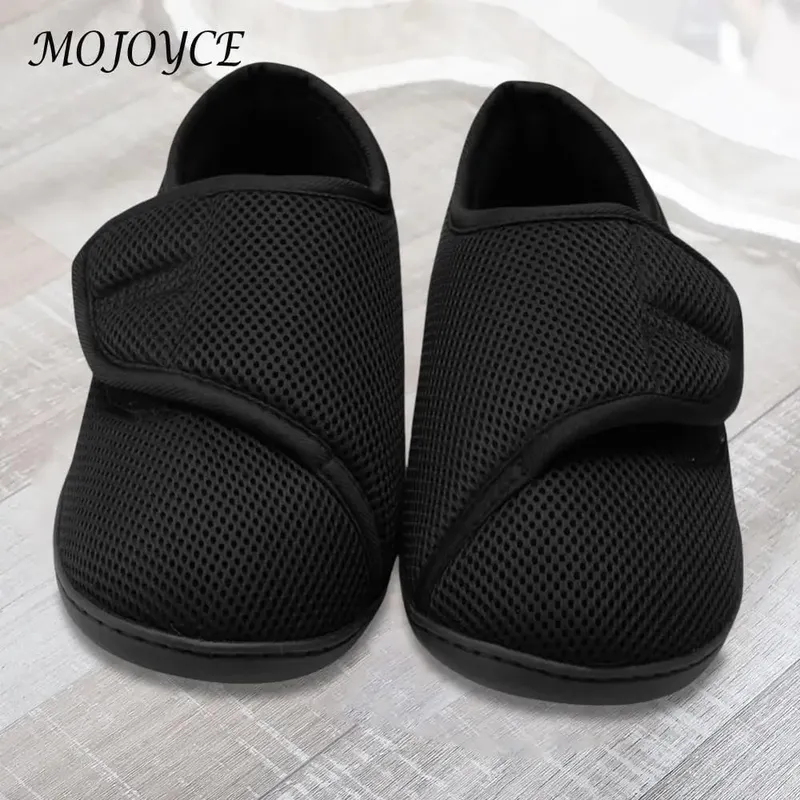
We've been selling shoes out of this little shop for a long time now, and if there's one question I hear more than any other, it's some version of "do you have anything that's actually easy to get on?" Usually it comes from someone shopping for a parent, or from a customer who's been fighting with laces for years and is just done with it. That question is exactly why I started stocking these Unisex Diabetic Shoes. SKU is P3256807998180163 if you want to look them up on the product page, and at $12.80 they're one of the least expensive pairs we carry. Cheap doesn't always mean bad, though. Sometimes it just means somebody found a way to make a simple thing well without charging you for a logo.
Let me start with what they're actually made of, because this is where a lot of budget shoes fall apart. The upper is a soft, flexible synthetic material with a plush lining inside — the supplier calls it a plush lining and honestly that's accurate, it feels like a fleece-lined slipper more than a stiff sneaker. The sole is a lightweight rubberized base with a bit of grip to it, nothing aggressive, but enough that you won't slide across a kitchen floor. The stitching is tidy, no loose threads hanging off the seams like you sometimes see at this price point. Now, is this a shoe that will survive ten years of daily mile-long walks? No, and I'd be lying if I said otherwise. It's a soft, comfort-focused shoe, not a hiking boot. But for what it's built to do, the build quality is genuinely better than the price suggests.
On to the specs. Sizes run in grouped ranges: 38-39, 40-41, 42-43, and 44-45, which is a little unusual if you're used to picking one exact size, but in practice the adjustable closure makes up for it. You're not locked into a single number — you tighten or loosen the hook and loop straps until it feels right. Colors vary, so check the product page for whatever's in stock this week because it does shift. The closure is the star here: two hook-and-loop straps across the top instead of laces, which means no bending down, no tying, no knots coming undone halfway through the grocery store. The toe box is wide. Genuinely wide. Not "a little roomy" wide — wide enough that swollen feet, bunions, or hammertoes aren't getting pinched.
So what do people actually use these for? Three scenarios come up again and again. First, around the house in winter, because that plush lining keeps feet warm on cold floors and they slip on in two seconds when you get up at night. Second, for a trip to the mailbox, the pharmacy, a short walk around the block — they're not dressy, but they're not embarrassing either. Third, and this is the big one, for anyone managing diabetes or plantar fasciitis who needs a shoe that won't rub, won't squeeze, and won't require them to bend over and tie anything. I've had customers buy a pair specifically to wear to dialysis appointments, and that tells you more than any spec sheet can.
Using them is about as simple as it gets. Slide your foot in, press the straps down where they feel snug but not tight, and you're done. If you have one foot that swells more than the other, adjust each shoe independently — that's the whole point of the closure. For maintenance, wipe the upper with a damp cloth and mild soap when it gets dirty, and let them air dry away from direct heat. Don't throw them in the washing machine. I know somebody will try it. Please don't. The hook-and-loop strips will pick up lint and hair over time, and when that happens just pick it out with a pair of tweezers or a bit of tape and they'll grip like new again.
Now the honest part. Pros: the wide toe box, the adjustable closure, the warmth, and the price — you're getting a lot of function for $12.80. Cons: the sizing bands are coarse, so if you're a true half size you're doing some guesswork, and the straps, while easy, don't lock in quite as securely as laces if you're doing anything athletic. Also, they're not waterproof. A wet sidewalk on a rainy day will get through eventually. And if you need real arch support for long distances, this is a soft comfort shoe, not an orthotic. If you have a custom insole you love, it might fit, it might not — the footbed is fairly flat.
Here's why this design works, from someone who's watched a lot of people try shoes on. Most foot pain in older adults comes from two things: pressure across the top of the foot and compression at the toes. Laces create pressure points because they pull the whole upper tight in one direction. Hook-and-loop straps let you control tension across the instep and the forefoot separately, so you can keep the toes free while still holding the heel in place. Add a wide toe box and a plush lining, and you've removed the two main sources of rubbing. This shoe suits anyone with diabetes, neuropathy, plantar fasciitis, or simply feet that have gotten wider and more sensitive with age. It's less suited to someone wanting a firm, structured walking shoe for serious mileage — that's a different product. But as an everyday slip-on for comfort and warmth? It does exactly what it promises.